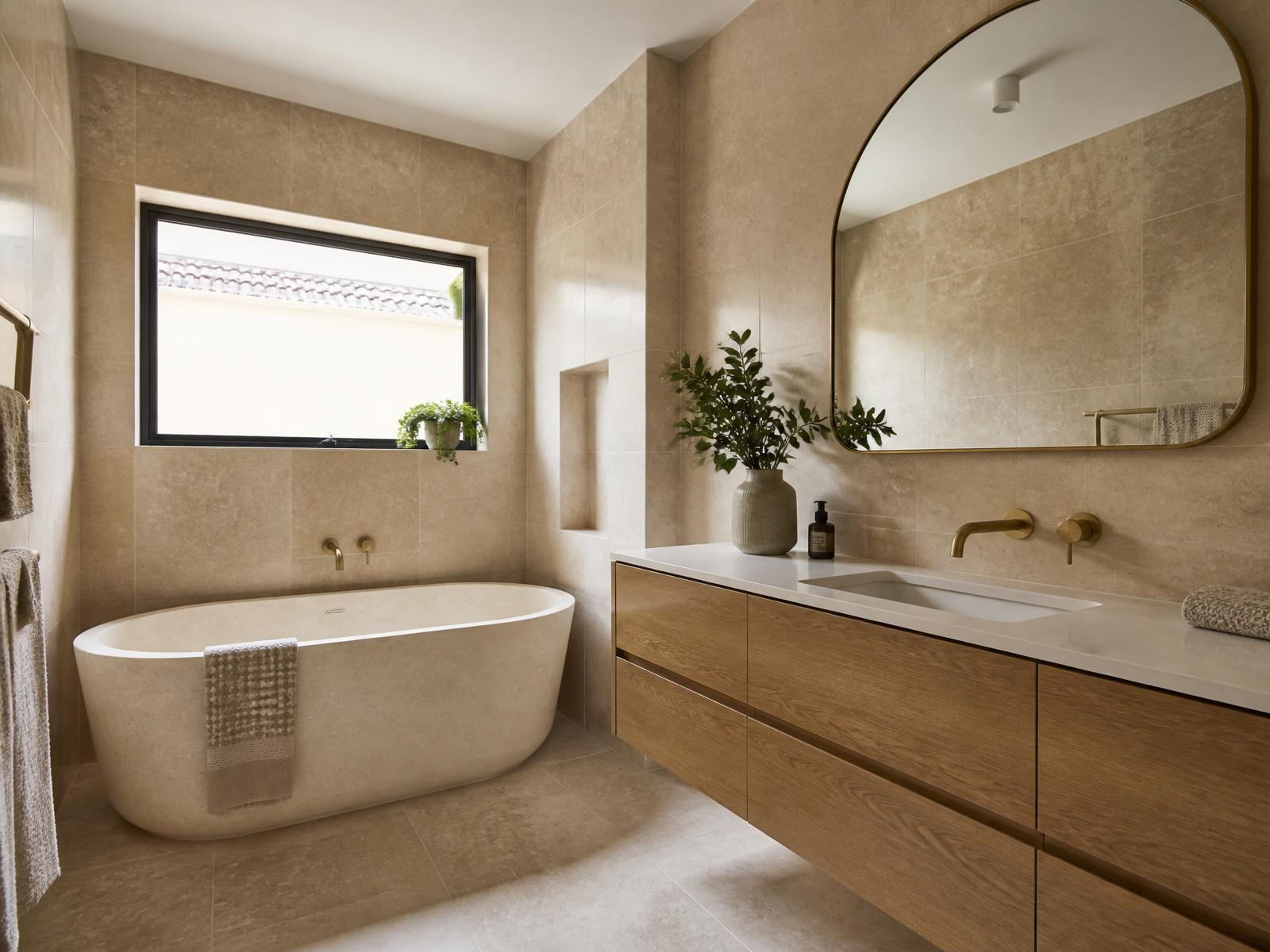
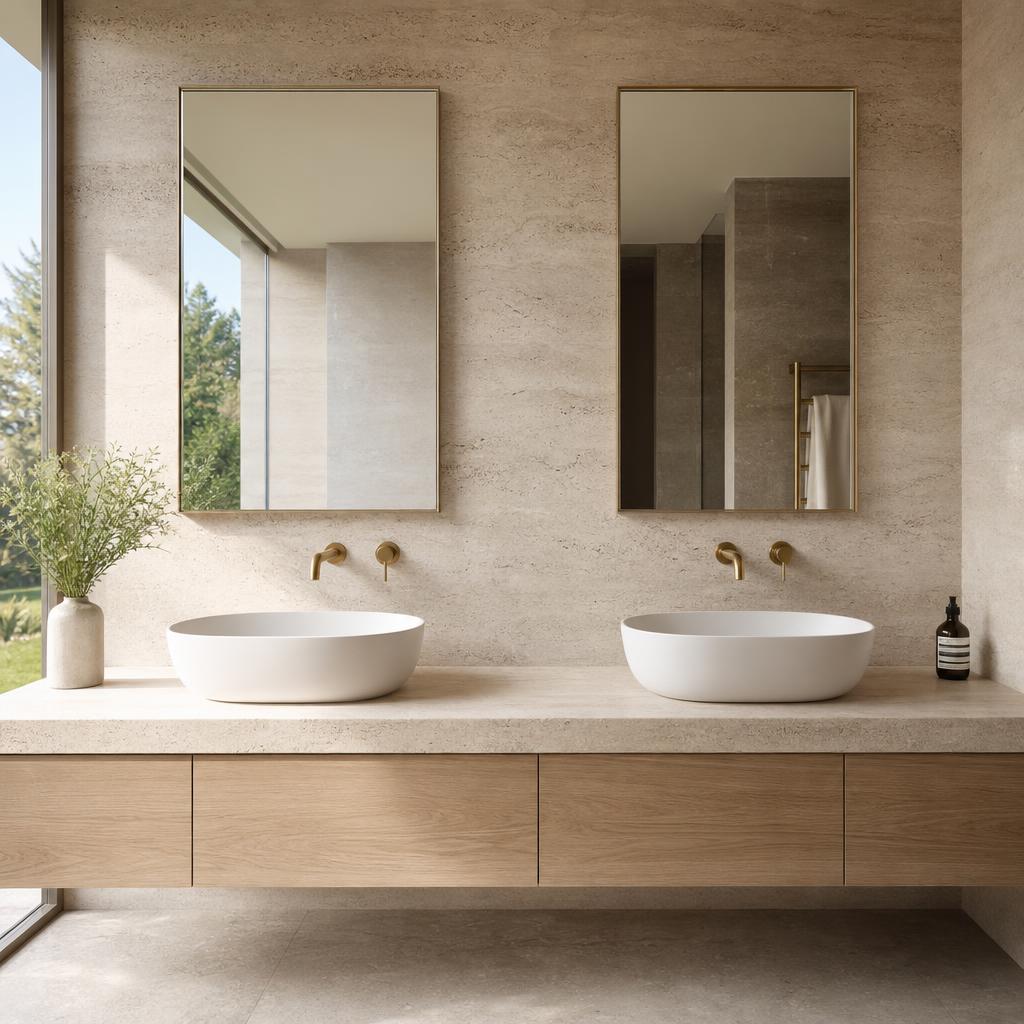
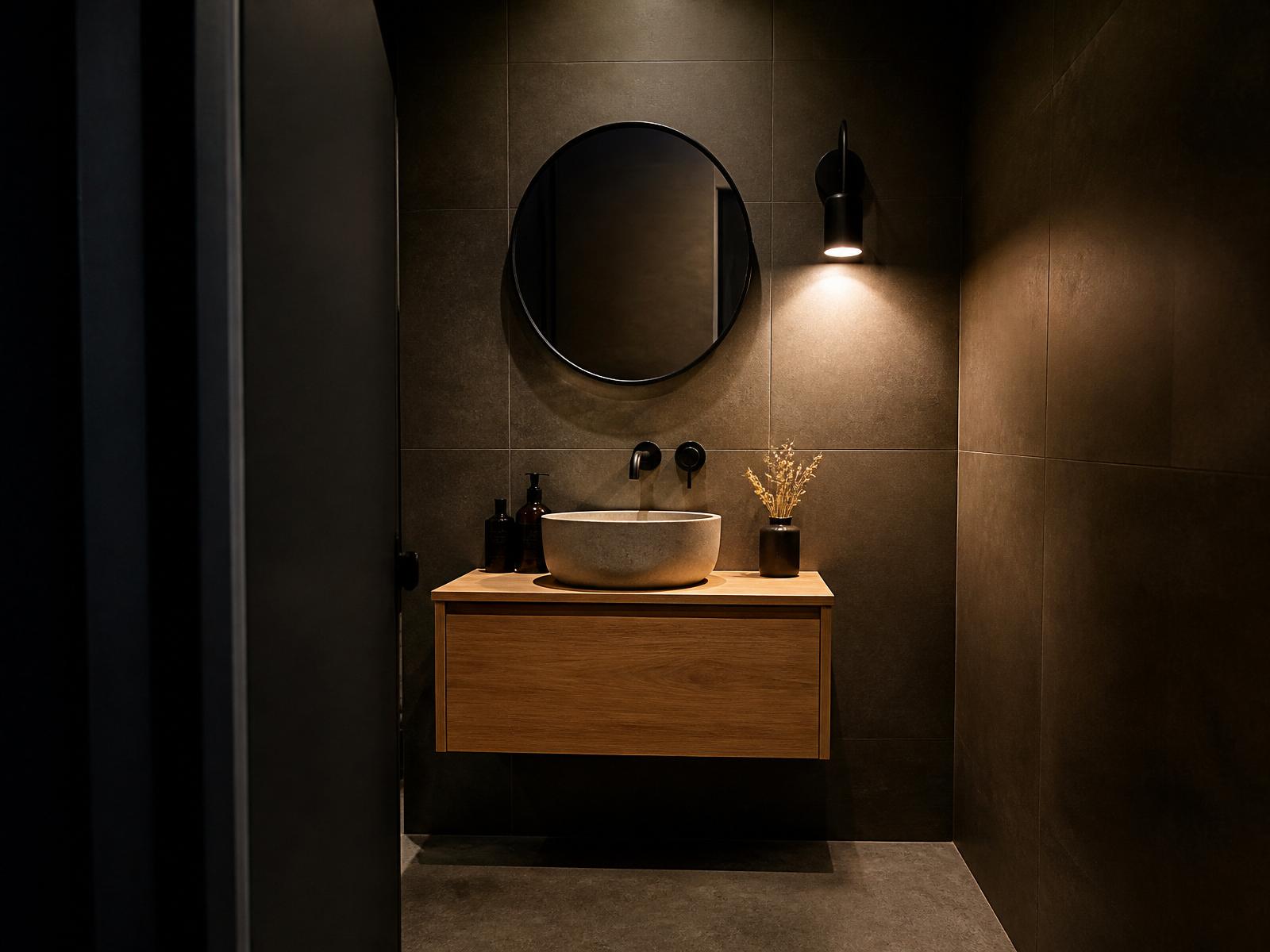
Large format (600×1200, 750×1500)
Fewer grout lines, calmer wall — makes a small room feel larger. Requires flatter substrate and adds ~$400–$700 to the setting-out labour.
Mid-format (300×600, 600×600)
The workhorse. Good for floors and walls, cheaper to set out, easy to source in the same range.
Mosaic and finger tiles
Feature walls only — a full mosaic bathroom reads as chaotic. Use on the shower niche, feature wall or splashback.
Slip ratings you can't ignore
For wet bathroom floors in Melbourne, look for a P3 or P4 slip rating (AS 4586). Polished porcelain looks stunning on Instagram and is dangerous under a wet foot. Honed or matt finishes are the right choice for shower floors and main bathroom floors — save the polished tiles for feature walls.
Natural stone vs porcelain
Natural stone (travertine, marble, limestone) has genuine variation and warmth — but needs sealing every 12–18 months and stains easily from cosmetics. Modern porcelain reproductions are dimensionally consistent, sealed for life, and cost 30–50% less. Reserve real stone for feature walls in low-traffic zones; use porcelain wherever water hits.
Grout colour is a design choice, not an afterthought
Grout tone shifts the entire visual weight of a wall. Match-tone grout (grout the same colour as the tile) makes large-format tiles disappear into an unbroken surface — best for calm, luxe schemes. Contrast grout (dark grout on light tile, or vice versa) turns the tile layout into a graphic feature — best for handmade tile and subway patterns.