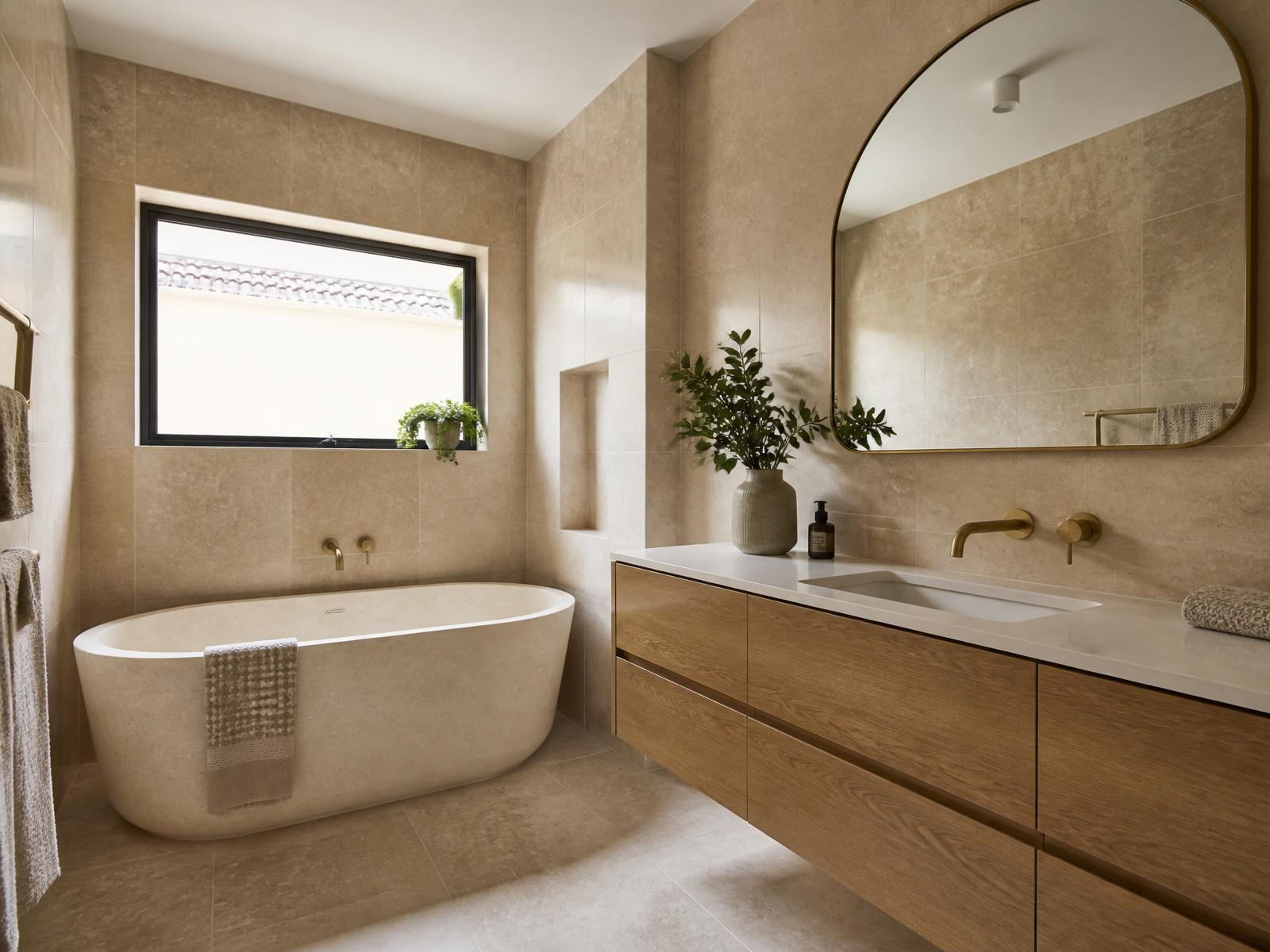
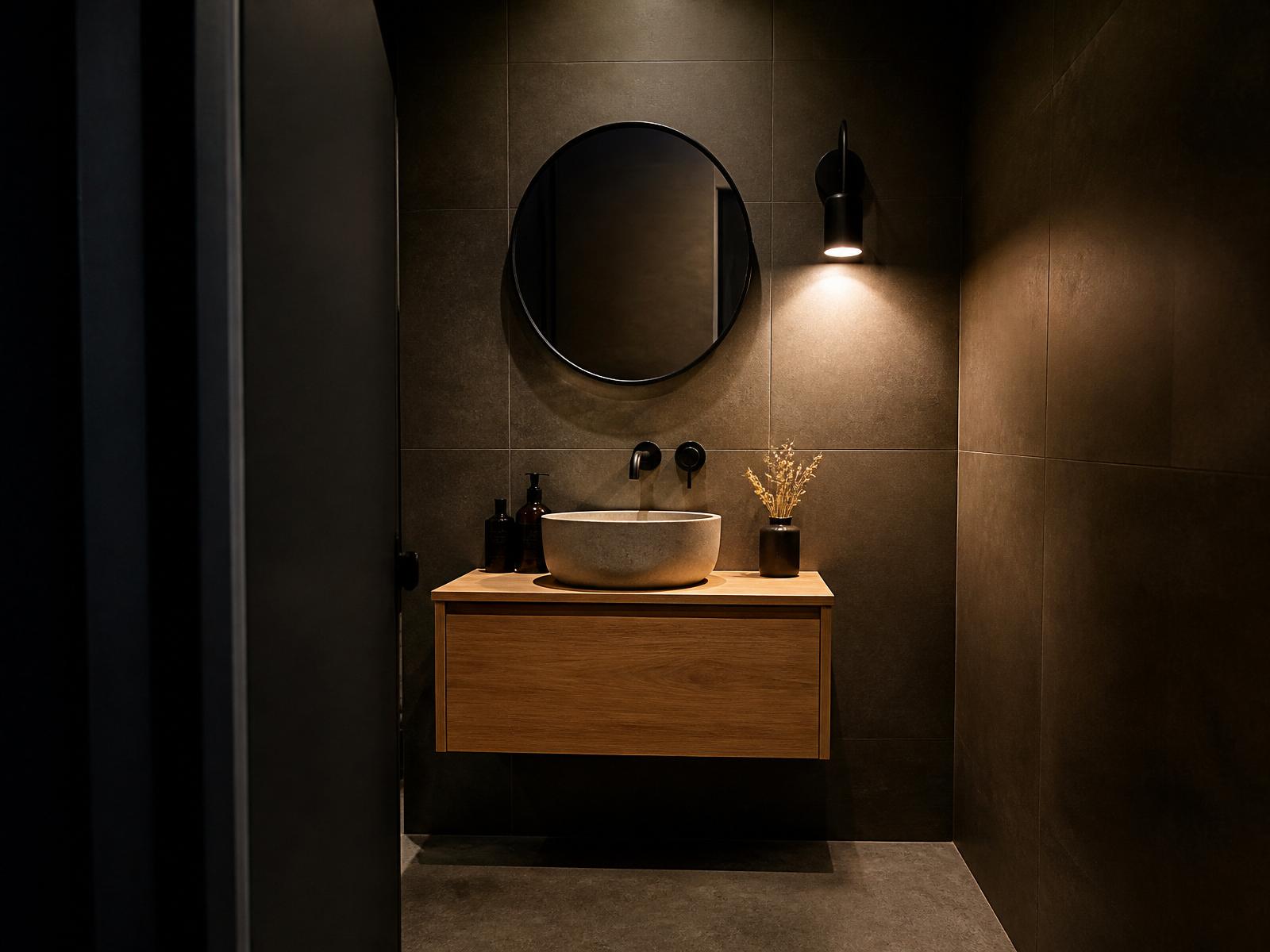
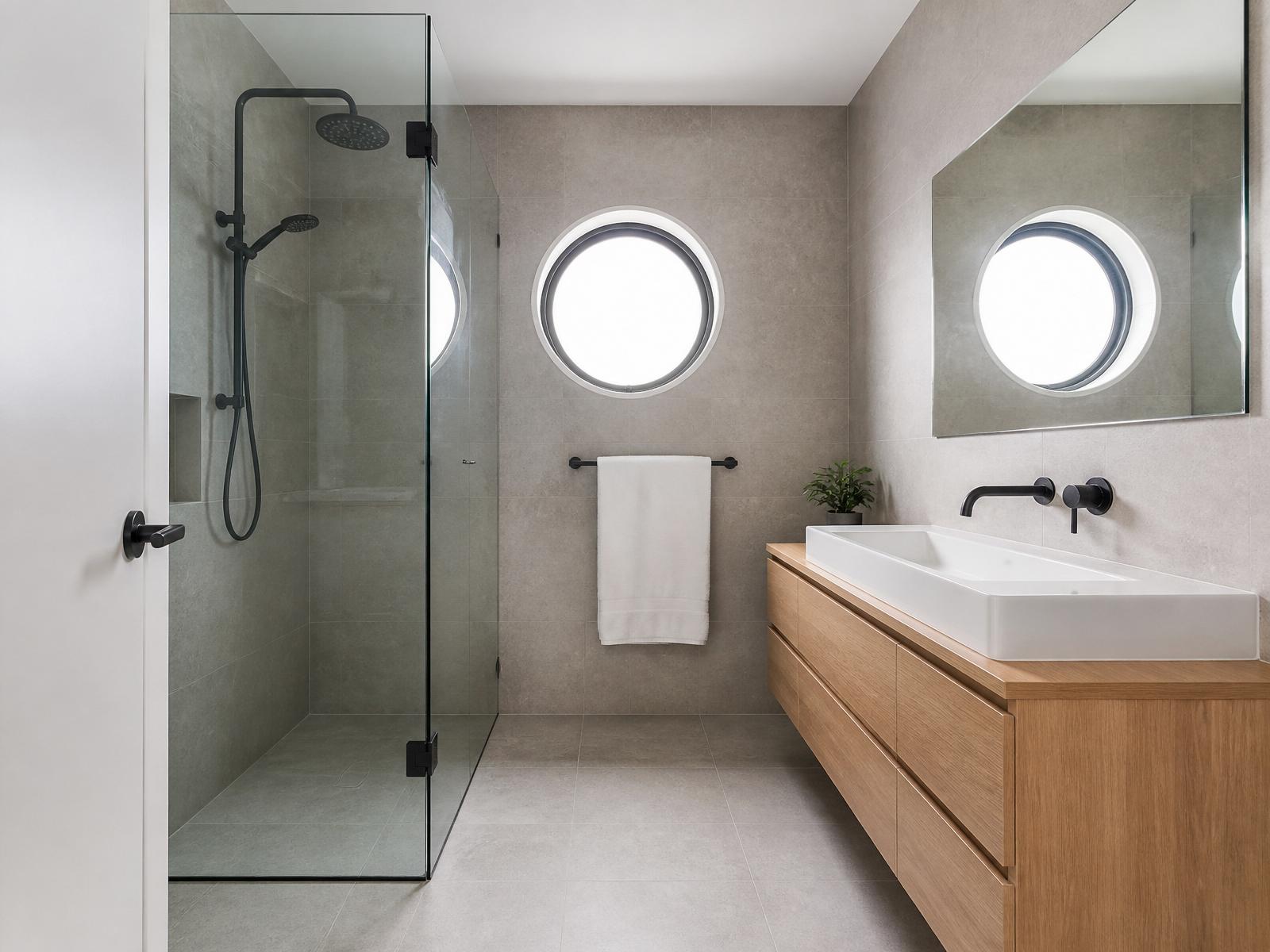
The three cost tiers that actually exist
Essentials (same footprint, curated tile range) runs $18,500–$24,000 in most northern suburbs. Signature (upgraded stone, twin vanity, feature niche) sits at $26,000–$36,000. Luxe (designer-led, natural stone, custom joinery) starts at $42,000 and moves quickly once natural stone is involved.
Where the money actually goes
Approximate splits on a $28,000 renovation: demolition & rubbish 6%, plumbing 14%, electrical 6%, wall/floor prep 10%, waterproofing 5%, tiling 18% (labour) + tile supply 12%, joinery & stone 14%, tapware & fixtures 10%, project management & overheads 5%.
Why cheap quotes end up expensive
Sub-$15k quotes almost always exclude waterproofing certification, plumbing compliance certificates, or subfloor preparation. When the missing item surfaces on day four, it comes in as a variation — usually two to three times more expensive than including it up front.
Melbourne-specific cost drivers
Three factors move Melbourne quotes more than any others: (1) heritage overlays and internal-access limits in Brunswick, Fitzroy, Preston and Coburg push labour up 5–10% because materials come in through the front hall on trolleys, (2) galvanised or lead-lined supply pipework hidden inside older northern-suburb weatherboards needs replacement in copper/PEX during rough-in, and (3) timber-floor homes across the north commonly need compressed fibre-cement sheeting installed before waterproofing.
What a fair fixed-price quote must include
A defensible fixed-price bathroom quote lists every tile, tap, mixer, vanity, mirror, shower screen and toilet by product code; specifies substrate preparation and waterproofing membrane brand; itemises plumbing and electrical rough-in with certificates of compliance; and defines the payment schedule stage by stage. Anything vaguer than that hides variation risk.
Financing and staging a renovation
Most Melbourne homeowners use one of three funding paths: personal savings (55%), a home-loan redraw or offset (35%), or a short-term unsecured loan (10%). Redraw is almost always cheapest. If cash-flow is tight, staging works: rebuild the main bathroom now, book the ensuite six months later — same trades, same specification, same warranty.
How much to redo a bathroom without moving anything
A same-footprint bathroom upgrade — new tiles, new vanity, new tapware, new screen, membrane replaced, nothing relocated — costs $18,500 to $24,000 in Melbourne's northern suburbs. That price assumes the room stays between 4m² and 6m², the floor waste stays where it is, and the wall linings are sound behind the old tiles. Every metre of relocated plumbing adds roughly $600–$1,200 by the time the pipework, patching and re-screed are done, which is why we always price a keep-the-layout option alongside the reconfigured one.
Bathroom upgrade cost by room type
Typical fixed prices we write in 2026: powder room $9,500–$14,000; ensuite 2–4m² $16,500–$26,000; main bathroom 5–7m² $24,000–$36,000; main bathroom plus laundry combined $38,000–$52,000; full second-storey bathroom with new waste runs from $42,000. A separate bath and shower in a room under 5m² is the single most expensive brief per square metre — it forces a smaller shower, a custom screen and tighter setting-out.
What we charge for waterproofing alone
As a standalone item, AS3740-2021 waterproofing on a main bathroom runs $1,400–$2,600 depending on wet-zone area, hob detailing and substrate preparation. Inside a full renovation it is around 5% of contract value. If a quote shows waterproofing under $900, ask which membrane brand, how many coats, and who signs the certificate — the answer usually explains the price.
Costs Melbourne homeowners forget to budget
Five line items that surface after the main quote: skip bin and tile-waste disposal ($550–$900 if not included), temporary bathroom hire if there's no second bathroom ($60–$90/week), painting the adjoining hallway once the door architrave is replaced ($400–$800), replacement of galvanised supply pipework found at rough-in ($900–$2,200), and mirror or shaving cabinet upgrades chosen after tiling (often $400–$1,500). Our fixed-price contracts include the first, price the fourth as a pre-agreed variation, and lock the rest at selection stage.